


Augmented Intelligence vs. Artificial Intelligence: Why the Distinction Matters for Our Future
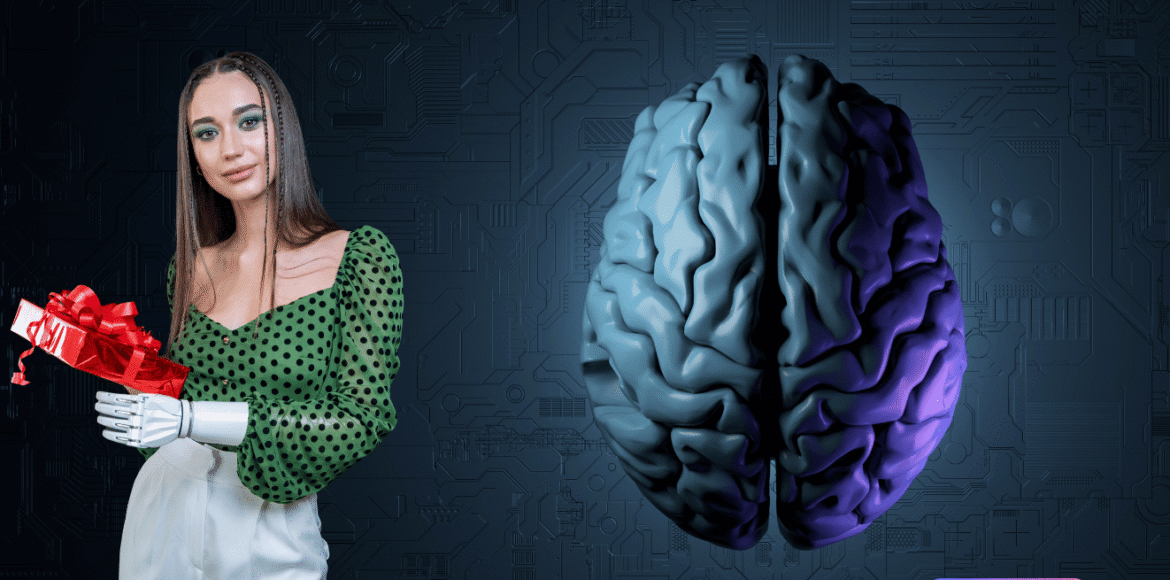
In conversations about the future, no term is more electrifying or more misunderstood than “Artificial Intelligence.” For many, the term conjures images of autonomous robots and self-aware systems—of machines designed to replicate and ultimately replace human intellect. This vision, popularized by decades of science fiction, focuses on a single question: “How smart can we make the machine?”
But what if that’s the wrong question?
What if the most important question isn’t how to replace human intelligence, but how to amplify it? This shift in perspective is the critical difference between Artificial Intelligence (AI) and a more powerful, human-centric concept: Augmented Intelligence (IA).
While the terms are often used interchangeably, their underlying philosophies are worlds apart. Understanding this distinction is not just an academic exercise; it is crucial for any leader, creator, or individual who wants to navigate the coming decades successfully. At Maxo.ai, this distinction is the very foundation upon which we build.
What is Artificial Intelligence (AI)? The Pursuit of Autonomy
At its core, the traditional pursuit of Artificial Intelligence is focused on creating systems that can perform tasks autonomously, without human intervention. The goal is to simulate human cognitive functions—learning, reasoning, problem-solving, perception—and build a machine that can operate independently.
The primary goal of AI is often substitution:
Automating a factory assembly line to replace manual labor.
Creating a chatbot to handle customer service inquiries instead of a human agent.
Developing a self-driving vehicle that navigates traffic without a driver.
These applications are incredibly valuable. They drive efficiency, reduce error, and handle tasks at a scale humans cannot. However, their design philosophy is centered on the machine. Success is measured by how well the AI performs the task on its own.
Ginni Rometty (Former CEO of IBM)
What is Augmented Intelligence (IA)? The Power of Partnership
- A doctor uses an AI that analyzes thousands of medical scans to highlight subtle patterns of disease, empowering the doctor to make a faster, more accurate diagnosis.
- A financial analyst uses an AI that sifts through millions of market data points to surface key trends and risks, allowing the analyst to build a more robust investment strategy.
- Our own apps, like InspireGT or MatzApp, are built on this principle. They don’t learn for you; they create a personalized environment that helps you learn more effectively and achieve your goals faster.
Tim O’Reilly (Tech thinker, O’Reilly Media)
At this stage, AI becomes a partner in decision-making. It sifts through the noise to find the signal, allowing your team to operate with a higher level of effectiveness. The focus shifts from “How can we do this faster?” to “What is the smarter thing to do?”
The Limitation: Level 2 is powerful, but it’s still largely guided by human strategy. The AI can predict what might happen based on historical data, but it cannot yet generate a novel, winning strategy on its own. It answers questions, but it doesn’t know which new questions to ask.
Why the Distinction is Critical for Our Future
Choosing to focus on Augmented Intelligence over purely Artificial Intelligence has profound implications for businesses and society.
1. It Keeps Humans at the Center. An augmentation-focused approach ensures that technology serves us, not the other way around. It prioritizes creating tools that make people better at their jobs, more creative in their pursuits, and more informed in their decisions. This mitigates the risk of mass job displacement and instead focuses on job evolution.
2. It Combines the Best of Both Worlds. Machines are brilliant at processing vast amounts of data at incredible speeds, but they lack common sense, context, and ethical understanding. Humans possess intuition, empathy, and strategic creativity. An augmented system combines the computational power of the machine with the contextual wisdom of the human, creating a partnership that is far more powerful than either could be alone.
3. It Drives a Higher Level of Value. While automation (AI) can deliver cost savings, augmentation (IA) can deliver new growth and innovation. An AI that automates invoicing saves money. An AI that helps your strategy team identify a completely new market to enter creates money. This is the difference between optimizing the present and inventing the future.
Conclusion: Our Commitment to Augmentation
At Maxo.ai, we believe the most powerful force in the universe is not artificial intelligence, but human potential, amplified.
Every product we build—from business acceleration tools that give leaders strategic foresight to personal wellness apps that guide you toward your goals—is founded on the principles of Augmented Intelligence. Our mission is not to build machines that think like humans, but to build intelligent systems that help humans think better.
The future doesn’t belong to the smartest AI. It belongs to the human-AI partnership that can solve the most complex problems and dream the biggest dreams. That is the future we are architecting.